Integration
Toast and OpenTable integration for restaurant GMs
DailyGM is the operating system that combines past performance from Toast with future demand from OpenTable, turning both into intelligence that drives better returns for the restaurant. Toast stays your POS. OpenTable stays your reservation book. DailyGM reads both. It does not write back.
Tools that work with Toast and OpenTable
DailyGM is the operating layer for restaurants that already run Toast and OpenTable. It reads past performance from Toast and future demand from OpenTable, then puts both in the Daily Operator Brief. It does not replace either system.
What DailyGM reads from Toast
After a successful connection, DailyGM reads Toast. It does not write orders, menus, employees, or schedules back.
- Business-date checks and sales
- Menu groups
- Actual labor when Toast labor is connected for the location
- Scheduled shifts when Toast Scheduling is that location’s scheduling source
Labor and schedule reads run only when those Toast sources are active. DailyGM does not import Toast inventory.
What DailyGM reads from OpenTable
When OpenTable is connected, DailyGM reads reservation demand. It does not write the book.
- Reservations and reserved covers
- Reservation pacing
- Cancellations and no-shows that change expected demand
DailyGM does not create, edit, or cancel reservations.
Daily manager report from Toast data
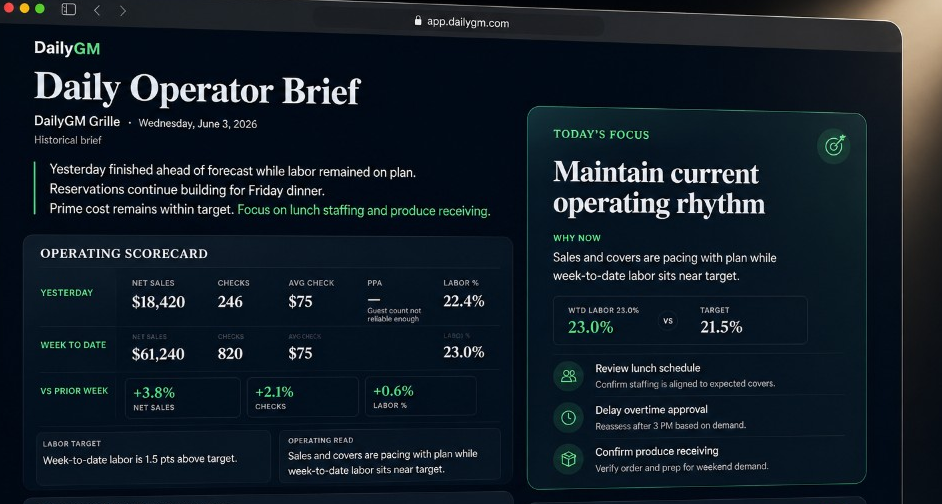
The Daily Operator Brief is the daily manager report. Yesterday’s sales and actual labor come from Toast when those sources are connected. OpenTable reservations and demand show the covers ahead. Together they give the GM one picture before service: what already happened, and what demand is on the books.
Take your Toast sales and labor numbers for a week into the free weekly prime cost calculator.
What managers see

Common questions
What tools work with Toast and OpenTable?
DailyGM works with Toast and OpenTable together. It reads business-date checks and sales, menu groups, actual labor, and Toast Scheduling shifts where connected, plus OpenTable reservations, reserved covers, pacing, cancellations, and no-shows. Toast stays the POS. OpenTable stays the reservation book. DailyGM does not import Toast inventory and does not write back.
Where is the daily manager report from Toast data?
The Daily Operator Brief is that daily manager report. It uses Toast business-date checks and sales, menu groups, and actual labor where connected, and adds OpenTable reservations and demand when OpenTable is connected. DailyGM does not import Toast inventory and does not write back to Toast.
What is the Toast OpenTable integration for restaurant GMs?
DailyGM is the operating system that combines past performance from Toast with future demand from OpenTable, turning both into intelligence that drives better returns for the restaurant. General managers read that picture in the Daily Operator Brief before service. Toast and OpenTable remain the systems of record.
Does DailyGM change Toast or OpenTable?
No. DailyGM reads from both. It does not write orders, menus, employees, or schedules back to Toast, and it does not create, edit, or cancel OpenTable reservations.